

Profile Author:
Fernando Pérez Godoy
Last Update:
2026-09-04
Status:
Reviewed
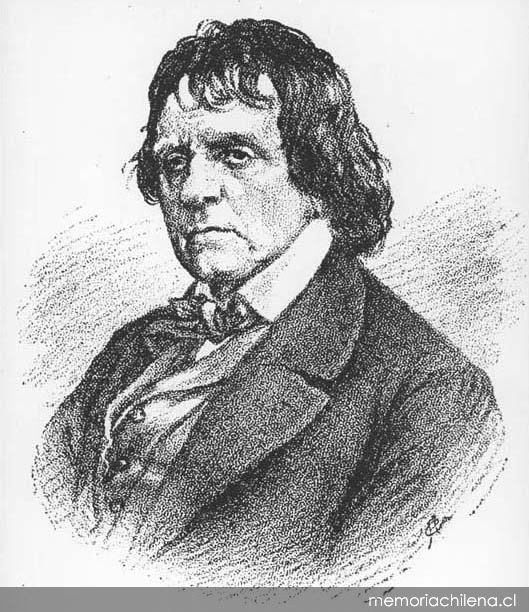
De Mora, José Joaquín (* 1783.01.10 † 1864.10.03)
Basic Overview Data
Born
1783.01.10, Cádiz
Died
1864.10.03, Madrid
Confession
Catholic
Institutional Affiliation
University of Granada
Liceo de Chile
University of La Paz
Keywords
Liberalism, Constitutional law
Normdata
VIAF: 74906
Important Family Relations
Father, Juan de Mora y Morales (1750 - ?), public prosecutor of the military court
Mother, Micaela Sánchez
Wife, Fanny Delauneux (1791 - 1887), teacher
Biographical and Intellectual Profile
Biography
José Joaquín de Mora was born into a bourgeois family during the reign of Carlos III. Educated in the principles of Catholic Enlightenment, and specifically linked to theological Jansenism, de Mora finished his legal degree in 1805 at the University of Granada, where, one year later, he was appointed professor of logic. In this chair, de Mora used the French philosopher Étienne Bonnot de Condillac as a guide, distancing himself from the influence of the dominant scholasticism in other Spanish universities. De Mora also taught law based on Jeremy Bentham's An Itroduction to the Principles of Moral and Legislation. Over time, de Mora not only maintained epistolary contact with Bentham but was also one of the promoters of utilitarianism in Latin America by translating some of his works.
During the period of the liberal triennium (1820-1823), de Mora began teaching natural law in the patriotic literary academy El Ateneo. His work in this institution, whose purpose was to strengthen the constitutional regime of the monarchy, was complemented by his fertile journalistic activity. His interest included Francis Bacon’s work, the spread of ‘scientific modernity’, and the translation of political works. In a climate of liberalism and intellectual openness, de Mora translated Holbach and debated with important intellectuals of the time.
In 1827, Mora was called by the governor of Buenos Aires, Bernardino Rivadavia. Since then, he undertook a series of reforms in various areas of knowledge – education, law, science, economy, and politic – in the republics of Argentina, Chile, Peru and Bolivia. His educational projects aimed to establish the principles of liberalism in South America. De Mora criticized the colonial system and the Hispanic legal sciences. In a clear contrast to the scholastic method used by the medieval jurisprudence, de Mora promoted the language of modern rational philosophy.
Hired by the Chilean government in 1828, Mora collaborated in drafting the Constitution of 1828, fostering the liberal political principles. De Mora taught natural law at the Liceo de Chile between 1829 and 1831. The legal curriculum consisted of the following subjects: natural law, law of nations, constitutional law, and Roman law. The textbooks for such subjects were the works of Jean-Jacques Burlamaqui and Emer de Vattel, the Constitution of the Republic, and Justinian’s Institutes. To prepare the subjects, de Mora wrote a handbook in seven volumes, titled Curso de Derechos del Liceo de Chile.
At the Ateneo del Perú high school, de Mora also taught natural law and public law in 1832. In 1834, the president of Bolivia, Andrés de Santa Cruz, invited him to teach literature at the University of La Paz. Returning to Spain, first in Cádiz and then in Madrid, de Mora continued to work on liberal economy and educational projects. In London, de Mora was first appointed representative of the Peruvian-Bolivian confederation (1838-1843). Then, in 1859, he was appointed diplomat representing Spain in London, where he remained until shortly before his death.
Comment on main natural law works
De Mora’s main work on natural law is Curso de Derechos del Liceo de Chile. The first two volumes on natural law and law of nations were published in 1830, while the volumes on Roman law reached the printing press in 1865. Mora's handbook was based on a summary of the work of the German jurist Johann Gottlieb Heineccius. De Mora was a follower of Heineccius because of the clarity with which he explained Roman legal matters. His goal was to replace the Roman legal handbook written by the seventeenth-century Dutch jurist Arnold Vinnius, which was used in Hispanic American universities. In 1832, de Mora published a handbook on logic and ethics, drawing on the works of several Scottish philosophers, including Smith, Reid, and Ferguson, among others.
Comment on profile’s conception of natural law
In Curso de Derechos del Liceo de Chile, de Mora establishes that the study of natural law should contribute to reforming colonial legal studies, which were at the service of the monarchical system. In the nations of the New World, the legal profession had to serve the system of modern representative government. Thus, legal education had to leave behind the influence of medieval common law jurists and respond to the principles of modern science.
The laws of France and England were possible models, whereas Roman law no longer provided the basis for reform of a legal system characterised by confusion, enormous variety and general ignorance. And whereas moral philosophers reduced natural law to a science of the mind, it should rightly be a science of action. That required the approach of empirical sciences such as chemistry that derived laws from facts. Legal precepts would then be natural laws that demonstrated regular effects, so that the obligation of natural law would simply be a matter of observation.
As far as de Mora is concerned, there are two legal orders: the natural and the positive. Natural law is a regular order by which God governs the universe, and humanity understands this order through the senses and reason. In this sense, primitive natural law is the code of humanity’s duties, and its study corresponds to moral philosophy. Given that all science is based on the knowledge of facts, that is, on experience, de Mora argues that it is not possible to study the state of primitive society. Although there are no data on this savage state, it can be imagined that natural law is also in force: regarding divine worship, self-defence, the use of irrational things, and natural freedom.
Through contracts, humanity can establish both family and civil society. The basis of the family is marriage, and the purpose of this institution is procreation. From the marriage contract, de Mora derives the rights of spouses to fidelity, cohabitation, and mutual services. De Mora opposes polygamy and divorce. Similarly, he outlined a series of rights and obligations between parents and children, without which the continuity of life would not be possible
Regarding civil society, de Mora turned to utilitarianism, establishing that humanity seeks to increase pleasure and decrease deprivation. Given the weakness of their faculties, individuals need the cooperation of their peers. By giving up part of their independence, each individual enters into a primitive pact intended to establish reciprocity with respect to the life and property of every person. Civil society is founded on reciprocity. A second condition must also be met according to de Mora: a guarantee. For the agreement to be executed, an authority is needed that, through its powers of coercion, can guarantee compliance with the agreement. This superior force is a moral entity called society.
Just as the law of gravity in physics constitutes an unquestionable principle, so too, for de Mora, is the law of freedom the foundational norm governing social life. The social state—emerging from the foundational pact—does not merely regulate freedom but brings it into being. Prior to this contractual framework, human conduct depended exclusively on the uncoordinated discretion of individuals. Within his legal philosophy, freedom is therefore defined as the capacity to act in ways that do not generate harm to the social body or to its members. Consequently, any legal norm or institutional arrangement that contravenes this criterion must be regarded as an infringement upon genuine freedom.
The second foundational principle of civil society is equality. Like freedom, equality does not exist in the state of nature but emerges exclusively through the establishment of a social agreement. The equality of human beings rests on the parity of their capacity for judgment and rational deliberation. In line with other jurists of his time, de Mora maintains that any positive law that undermines the freedom or equality inscribed in the natural order lacks legitimacy and therefore cannot be regarded as truly binding.
A third law of civil society is property. As far as de Mora is concerned, society born of a common pact cannot be sustained if the ownership of each individual’s acquisitions is not respected. Through labour, something that belongs to everyone comes to belong to only one. Following John Locke, de Mora argues that the legitimacy of the right to property is based on labour. Obligations also emanate from property ownership, such as the obligation to work, which is the basis of property. In addition, there is an obligation tied to possession: to be an owner, one must currently possess something. A third obligation is compensation for any damage to property. The most characteristic aspect of property law, according to his understanding, is inviolability. Among free people, property is unalterable, sacred, and constantly growing. Thus, trade is defined as the set of agreements through which individuals reciprocally transfer property.
According to de Mora, there are also natural rights of society. Society is a moral entity whose particular rights are similar to those of individuals, such as the defence of life. These natural rights also include freedom, understood as the right to organise and adopt the political regime that best suits it; equality, in the sense of making pacts and agreements with other societies and recognising the use of force for their fulfilment; and property.
Biographical Data
Education
1799 - 1805, Legal studies, University of Granada
Degrees
1805, Bachelor of Laws, University of Granada
Travels
1808 - 1814, France (Autun)
1823 - 1826, England (London)
1827 - 1828, Argentina (Buenos Aires)
1828 - 1831, Chile (Santiago de Chile)
1831 - 1838, Peru (Lima)
1838 - 1843, England (London)
1844 - 1864, Spain (Madrid)
Teaching
1806-1808, Logic, University of Granada
1820-1823, Natural Law, El Ateneo (Madrid)
1829-1831, Natural law and law of nations, Liceo de Chile
1832, Natural law and public law, Ateneo del Perú
1834-1838, Literature, University of La Paz
Career
1806 - 1810, Professor of logic, University of Granada
1820 - 1823, Teacher, Patriotic Literary Society El Ateneo (Madrid)
1827 - 1827, Political counsellor, President Bernardino Rivadavia (Buenos Aires)
1829 - 1831, Teacher, Liceo de Chile
1833 - 1838, Personal adviser, President Andrés de Santa Cruz (La Paz)
1834 - 1838, Professor of literature, University of La Paz
1839 - 1843, Consul, Spanish Monarchy (London)
Titles, Memberships and Other Relevant Roles
1817 - 1820, Editor and collaborator, Crónica Científica y Literaria, Madrid
1820 - 1820, Editor and collaborator, Minerva Nacional, Madrid
1820 - 1822, Editor and collaborator, El Censor, Madrid
1824 - 1826, Editor and collaborator, Museo Universal de Ciencias y Artes, London
1824 - 1827, Editor and collaborator, Ocios de Españoles Emigrados, London
1826 - 1826, Editor and collaborator, Correo Literario y Político de Londres, London
1827 - 1827, Editor and collaborator, Crónica Política y Literaria de Buenos Aires, Buenos Aires
1827 - 1827, Editor and collaborator, Crónica Política y Literaria de Buenos Aires, Buenos Aires
1827 - 1834, Editor and collaborator, Mercurio Peruano, Lima
1828 - 1829, Editor and collaborator, El Mercurio Chileno, Santiago
1839 - 1839, Editor and collaborator, Mercurio Peruano, Lima
1845 - 1864, Editor and collaborator, Revista de España, de Indias y del Extranjero, Madrid
1847 - 1847, Editor and collaborator, Revista Científica y Literaria, Madrid
1851 - 1851, Editor and collaborator, El Clamor Público, Madrid
1857 - 1864, Editor and collaborator, La América, Crónica Hispano-Americana, Madrid
Bibliographical Data
Printed Sources
Books
[Translator] De Buonaparte y de los Borbones por F. A. de Chateaubriand. Traducido al castellano por José Joaquín de Mora (Cádiz: Imprenta de Don Ramón Howe, 1814): Digital version
[Translator] Consejos que dirige a las Cortes y al Pueblo Español Jeremías Bentham(Madrid: 1820):Digital version
Discurso inaugural que pronunció en el Ateneo Español D. José Joaquín de Mora, uno de sus socios, al abrir un curso de derecho natural el dia 7 de Marzo de 1821 (Madrid: Imprenta del Censor, 1821): Digital version
[Translator] Ensayo sobre las preocupaciones escrito en francés por el Baron de Holbach; y traducido con correcciones y adiciones por José Joaquín de Mora (Madrid: En la librería extranjera de F. Denné, 1823): Digital version
Cuadros de la historia de los árabes: desde Mahoma hasta la conquista de Granada (London: R. Ackermann, Strand, 1825): Digital version
[Translator] Compendio de las vidas de los filósofos antiguos escritos en francés por Fenelon y traducidos al castellano por J.J. de Mora (Paris: librería de Cormón y Blanc, 1825): Digital version
Meditaciones poéticas (London: R. Ackermann, 1826).
Curso de derechos del Liceo de Chile Tomo I (único): Derecho Natural y Derecho de Jentes (Santiago de Chile: Imprenta Republicana, 1830): Digital version
Cursos de Lógica y Ética según la Escuela de Edimburgo (Lima: Imprenta de José Masias, 1832): Digital version
Poesías de José Joaquín de Mora (Cádiz: Librería de feros, 1836).
Leyendas españolas (Paris: Librería de Don Vicente Salvá, 1840): Digital version
[Translator] La moral universal o Los deberes del hombre fundados en su naturaleza por el Barón de Holbach ( Madrid: Oficina del Establecimiento Central, 1840): Digital version
Curso de Derecho Natural por don José Joaquín de Mora (Santiago de Chile: Imprenta Liberal, 1842).
De la libertad del comercio (Sevilla: Calvo-Rubio y Compañía, Editores, 1843): Digital version
Memoria sobre puertos francos (Madrid: Imprenta de D. Benito Lamparero y Compañía, 1844): Digital version
[Translator] Tratado de la evidencia, escrito en inglés por Jorge Campbell, de la Real Sociedad de Edimburgo; traducido al castellano con notas por José Joaquín de Mora (Lima: Imprenta del Comercio, 1846): Digital version
El Gallo y la perla: novela original (Madrid: Imprenta de Agustín Espinosa, 1847): Digital version
Curso de Derechos del Liceo de Chile, por D. José Joaquín de Mora, Director de aquel Establecimiento (La Paz: Imprenta del Pueblo, 1849):Digital version
Colección de sinónimos de la lengua castellana (Madrid: Imprenta Nacional, 1855): Digital version
Manuscript Sources
Natural Law Network
Personal Connections
1820, Jeremy Bentham, London [de Mora's collaborator]
1830, Andrés Bello, Santiago [de Mora's collaborator]
References and Acknowledgement
Profile References
Literature
Amunátegui, Miguel Luis: Don José Joaquín de Mora: Apuntes biográficos (Santiago de Chile: Imprenta Nacional, 1888):Digital version
Astigarraga Goenaga, Jesús, Usoz, Javier and Juan Zabalza: Voces económicas en la Enciclopedia Moderna (Madrid: Instituto de Estudios Fiscales, 2022).
Cerpa, Rafael: "José Joaquín de Mora, una biografía intellectual. Los años ilustrados", in Desde el Sur, 4.2 (2012), p. 27-64.
Monguió, Luis: Don José Joaquín de Mora y el Perú del ochocientos (California: University of California Press, 1967).
Núñez, Estuardo: Biblioteca Hombres del Perú. Cuarta Serie. José Joaquín de Mora (Lima: Hernan Alva Orlandini, 1966).
Pérez, Rodrigo: "Los inicios de la enseñanza del Derecho Constitucional en el Chile decimonónico: el Liceo de Chile y el Colegio de Santiago (1828-1831)", in Anuario de Estudios Americanos, 68.1 (2012), p. 141-162
Ramos, Carlos: "La cultura jurídica en época de la Confederación Perú-Boliviana", in Revista de Estudios Histórico-Jurídicos, XII (2000), p. 267-297.
Vilar, Juan Bautista and María José Vilar: "José Joaquín de Mora", in Diccionario biográfico electrónico, Real Academia de la Historia (Madrid: 2018): Digital version
Virgilio Ibarz and Ramón León: "José Joaquín de Mora (1783-1864): un introductor de la escuela escocesa del sentido común en el Perú, Bolivia y España", in Revista de historia de la psicología, 30.2-3 (2009), p. 145-152.
Acknowledgement
Profile Author:
Fernando Pérez Godoy
How to Cite This Profile
Godoy, Fernando Pérez (2026), "José Joaquín de Mora" Natural Law 1625-1850: Database, ed. Mikkel Munthe Jensen (Erfurt, Gotha, Jena: ThULB, 2019-), URL: https://naturallawdatabase.thulb.uni-jena.de/database/natlaw_238